
Audience Search Behavior Insight Examples for SEO Pros
SERPView Team
SEO Analytics

TL;DR:
- Audience search behavior reveals user motivations, decision criteria, and psychological context beyond keyword volume. Integrating multi-platform signals and AI prompt data helps craft behavior-driven SEO strategies that improve engagement and conversions. Regularly updating segmentation and content based on evolving search insights ensures marketing remains aligned with actual user needs.
Audience search behavior insights are defined as the detailed understanding of why users search, how they phrase queries, and what they do after clicking a result. These insights go far beyond keyword volume. They reveal user motivations, decision criteria, and the psychological context behind every search session. For SEO professionals and digital marketers, practical audience search behavior insight examples are the difference between content that ranks and content that converts. This article covers concrete examples, segmentation frameworks, and comparison data to help you build a behavior-driven SEO strategy in 2026.
1. What does audience search behavior mean in modern SEO?
Audience search behavior is the study of how users interact with search engines, including what they type, how they refine queries, and how long they engage with results. The standard industry term is search behavior analysis, and it covers everything from query patterns to post-click engagement signals.
Modern search behavior goes well beyond keyword matching. Studies of over 200,000 ChatGPT interactions show nearly 80% of queries are complex, open-ended, and non-searchable through traditional search engines. That finding means users are no longer condensing their needs into two-word phrases. They are describing problems, providing context, and expressing motivations in full sentences.
AI-powered search has accelerated this shift. When users type conversational prompts, they expose raw intent: the objections they have, the comparisons they are making, and the outcomes they want. This is information that a keyword volume report cannot give you.
-
Multi-platform signals matter. Using platforms like Reddit and TikTok alongside Google enriches audience understanding across the full journey. A user researching project management software may start on Reddit, move to YouTube, and then hit Google before converting.
-
Firmographic and behavioral segmentation replaces the old demographic bucket approach. You segment by company size, industry, role, and journey stage, not just age and location.
-
Conversational prompt data from AI tools reveals the “why” behind searches, not just the “what.”
Pro Tip: Pull sales call transcripts and support tickets into your keyword research process. The language customers use in those conversations maps directly to the queries they type into AI search tools.
2. Real audience search behavior insight examples from AI-driven data

Concrete examples make the concept tangible. The following cases show how search behavior insights surface in practice and what they mean for your content strategy.
AI Overview pages increase dwell time significantly
AI Overview presence on search pages keeps 41.9% to 48.5% of users active at the 21-second mark, compared to only 12% for navigational searches without AI Overviews. That gap is enormous. It means users on AIO pages are pausing, reading, and reconsidering before they click. For content creators, this signals that depth and structure matter more than ever because users are evaluating your content before they even visit your page.
Micro-segmentation lifts click-through rates
Micro-segmentation of content based on persona and buyer stage can achieve performance lifts up to 33% in click-through rates. The same research notes that 42% of CRM software buyers use AI search for vendor evaluation. That combination tells you two things: B2B buyers are using AI to shortlist vendors, and content tailored to a specific buyer stage outperforms generic content by a measurable margin.
Behavioral segmentation in e-commerce
An e-commerce platform using AI to segment users by subtle browsing behaviors, such as scroll depth, category dwell time, and return visit frequency, can refine product recommendations at the individual level. AI technologies enable precise audience segmentation by analyzing demographics, psychographics, and browsing behaviors together. The result is a recommendation engine that adapts to real-time signals rather than static purchase history.
Content personalization in online media
Online media companies that segment audiences by psychographic profile and engagement pattern see measurable gains in retention. AI-driven audience segmentation allows continuous optimization by adapting campaigns to real-time consumer behavior changes. A reader who consistently engages with long-form analysis gets served more of it. A reader who skims gets shorter formats and stronger headlines.
| Insight Type | Example | Performance Impact |
|---|---|---|
| AIO dwell time | Users stay active 3x longer on AIO pages | Higher pre-click evaluation of content |
| Micro-segmentation | Persona-based CTAs in B2B CRM content | Up to 33% CTR lift |
| Behavioral e-commerce | Scroll and dwell-based product recommendations | Improved conversion relevance |
| Psychographic media | Long-form vs. short-form content by reader type | Increased retention and return visits |
Pro Tip: Check your AI Overview performance data to see which queries trigger AIO results for your site. Those pages deserve deeper content investment because users spend more time evaluating them.
3. How to map audience intent using search queries
Audience intent mapping is the process of connecting specific search queries to the motivations, objections, and decision criteria of defined audience segments. The goal is to match content to where a user is in their decision process, not just what keyword they typed.
-
Segment by firmographics first. For B2B content, start with company size, industry vertical, and buyer role. A VP of Marketing at a 500-person SaaS company has different objections than a solo founder. Segmenting by firmographics, persona, behavior, and journey stage allows you to deliver personalized content variants and CTAs tailored for each visitor profile.
-
Map keywords to intent profiles. Group your keyword set by the stage of the buyer journey each query represents. “What is CRM software” maps to awareness. “Best CRM for remote sales teams” maps to consideration. “HubSpot vs. Salesforce pricing” maps to decision. Each group needs different content, different CTAs, and different proof points.
-
Use first-party signals for anonymous visitors. Reverse IP lookup and first-party analytics are effective signals for anonymous visitor segmentation and content personalization. You can identify that a visitor is from a mid-market financial services firm without them filling out a form, then serve them industry-specific case studies automatically.
-
Build content variants by segment. A single landing page can serve multiple segments through dynamic content blocks. The headline, hero image, testimonial, and CTA change based on the visitor’s firmographic profile or behavioral history. This approach ties search intent directly to on-page experience.
-
Pull intent signals from non-Google platforms. Reddit threads, TikTok comment sections, and LinkedIn posts contain the exact language your audience uses when they are not in “search mode.” That language belongs in your content because it reflects how users actually think about their problems.
4. Traditional keyword SEO versus behavior insight-driven SEO
The gap between these two approaches is not about tools. It is about what question you are trying to answer.
Traditional keyword-based SEO asks: “What terms do people search, and how often?” Behavior insight-driven SEO asks: “Why do people search this, what do they already know, and what would make them act?” Traditional keyword metrics remain important but lack the contextual insights conveyed by AI prompt data revealing motivations, objections, and decision criteria.
| Feature category | Keyword-based SEO | Behavior insight-driven SEO |
|---|---|---|
| Primary data source | Search volume and ranking data | Prompt data, first-party signals, multi-platform behavior |
| Insight depth | Surface-level query frequency | Motivations, objections, and decision context |
| Personalization ability | Limited, page-level optimization | Dynamic content by segment and journey stage |
| Performance focus | Rankings and impressions | CTR, dwell time, and conversion by segment |
| Adaptability | Periodic keyword refreshes | Continuous real-time adjustment |
The practical implication is clear. A page optimized only for keyword density can rank well and still fail to convert because it does not address the specific objection a buyer has at that stage. Behavior insight-driven SEO closes that gap by aligning content with the actual decision process. Serpview’s extended data storage gives you the historical depth to spot these behavioral shifts over time, not just in the last 16 months that Google Search Console provides by default.
5. Situational recommendations for applying search behavior insights
Different business models require different approaches to behavioral insights. The right framework depends on your audience type, sales cycle, and content infrastructure.
-
B2B SaaS targeting niche buyer personas: Use firmographic segmentation combined with AI prompt analysis. Pull queries from AI tools to identify the specific objections your buyers express. Build content that addresses those objections directly at the consideration and decision stages. The role of audience segmentation in search is especially high in B2B because buying committees include multiple roles with different concerns.
-
E-commerce retail: Focus on behavioral segmentation using scroll depth, session frequency, and category affinity. Integrate multi-platform search data from Google, TikTok, and Pinterest to understand where discovery happens versus where conversion happens. A user who discovers a product on TikTok and then searches Google for reviews is in a different intent state than a direct search visitor.
-
Content media and publishing: Leverage psychographic segmentation and audience engagement metrics to personalize content delivery. Segment by topic affinity, reading depth, and return frequency. Serve long-form analysis to deep readers and curated roundups to casual visitors.
Pro Tip: Avoid building personas once and leaving them static. Search behavior shifts with news cycles, product launches, and algorithm updates. Audit your audience segments at least quarterly and update your content variants to match.
Key takeaways
Behavior insight-driven SEO outperforms keyword-only approaches because it aligns content with user motivations, objections, and decision context at every stage of the journey.
| Point | Details |
|---|---|
| AIO dwell time signals content depth | Users stay active 3x longer on AI Overview pages, so prioritize structured, thorough content. |
| Micro-segmentation drives CTR gains | Persona-based content variants can lift click-through rates by up to 33% in B2B contexts. |
| Intent mapping beats keyword volume | Mapping queries to buyer stage and motivation produces more relevant content than volume-based targeting alone. |
| Multi-platform data enriches understanding | Reddit, TikTok, and LinkedIn reveal the language and objections that Google data alone does not capture. |
| Segmentation requires regular updates | Audience behavior shifts with algorithm changes and market conditions, so review segments at least quarterly. |
Why I stopped chasing keywords and started reading prompts
The most useful shift I made in my SEO practice was treating AI search prompts as primary research. When a user types a 40-word query into an AI tool, they are essentially writing a brief. They tell you their context, their constraints, and their preferred outcome. No keyword tool gives you that.
The practitioners I see struggling in 2026 are the ones still optimizing for search volume as the primary signal. They rank for terms that attract the wrong audience or the right audience at the wrong stage. The result is traffic that does not convert and content that does not retain.
The better mental model is a behavior map, not a persona card. A persona card is static. A behavior map shows you how the same person searches differently at different stages, on different platforms, and with different levels of urgency. When you build content against a behavior map, you stop writing for a fictional archetype and start writing for a real decision process.
The data on AIO dwell time reinforces this. Users are not just clicking the first result anymore. They are reading, pausing, and reconsidering. That is your window. If your content addresses the real question behind the query, including the objections and the context, you earn the click and the conversion. If it just matches the keyword, you get skipped.
Continuous monitoring is not optional at this point. AI search behavior evolves faster than any static content calendar can track. The teams winning in organic search right now are the ones treating their content as a living system, not a publishing schedule.
— Utsav
Serpview gives you the data to act on these insights
Understanding search behavior at the segment level requires more data than most standard analytics tools provide. Serpview consolidates search performance across multiple properties into a single dashboard, with access to up to 50,000 rows of data compared to the 1,000-row limit in Google Search Console.
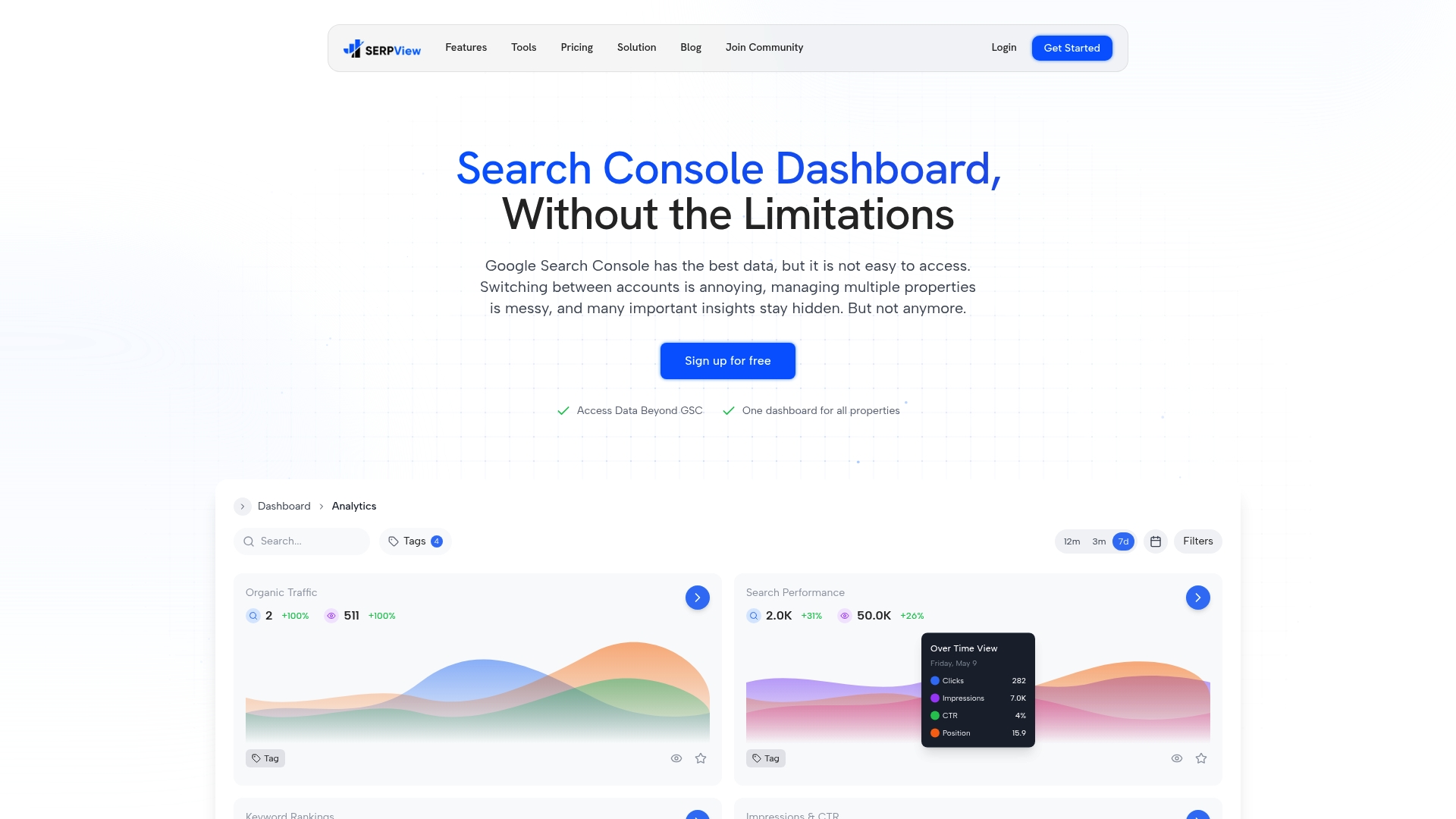
For SEO professionals working with behavior-driven content strategies, Serpview’s features for search intent analysis and query pattern reporting surface the behavioral signals that standard reporting misses. You can track how different audience segments interact with your content over time, compare mobile versus desktop behavior, and benchmark performance against industry standards. If you are ready to move from keyword tracking to full behavior analysis, Serpview is built for exactly that workflow. Learn more about how Google Search Console data integrates with Serpview’s extended analytics to give you a complete picture.
FAQ
What does audience search behavior mean for SEO?
Audience search behavior refers to the patterns, motivations, and interactions users have with search engines when looking for information. For SEO, it means understanding not just what users search but why they search it and what they do after seeing results.
How does AI change search behavior analysis?
AI search tools expose raw user intent through conversational, open-ended queries that traditional keyword tools cannot capture. Studies of ChatGPT interactions show nearly 80% of queries are complex and non-searchable through traditional engines.
What is audience intent mapping in search?
Audience intent mapping is the process of connecting specific search queries to the motivations and decision stage of defined user segments. It produces content that matches where a user is in their buying process, not just what keyword they typed.
How does micro-segmentation improve search performance?
Micro-segmentation delivers content variants tailored to specific personas and buyer stages. Persona-based segmentation can lift click-through rates by up to 33%, particularly in B2B categories like CRM software.
Which platforms should I use for search behavior analysis?
Google remains the primary source, but Reddit, TikTok, and LinkedIn provide behavioral signals that reveal how audiences think and talk about problems before they enter a formal search session. Combining these sources gives you a fuller picture of the full discovery-to-conversion journey.
Recommended
Ready to unlock your full GSC potential?
SERPView helps you access all your Google Search Console data without limitations. Start your free trial today.
Get Started Free