
What Is Predictive Search Analytics? A Clear Guide
SERPView Team
SEO Analytics
What is predictive search analytics?
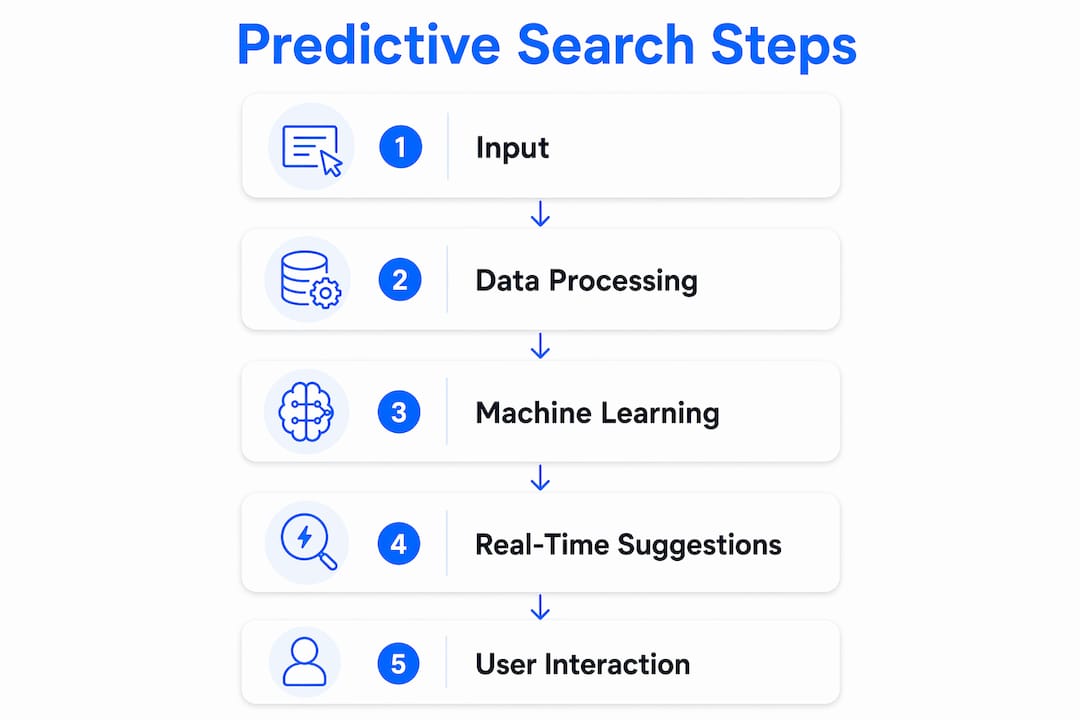
Predictive search analytics is the practice of using machine learning and real-time data to anticipate what a user is searching for before they finish typing. Rather than waiting for a complete query, the system processes each keystroke and surfaces relevant suggestions instantly. Google’s autocomplete feature alone saves approximately 200 years of cumulative typing time every single day across its global user base, which gives you a sense of the scale this technology operates at.
Key concepts to understand upfront:
- Real-time processing: The system analyzes partial input as you type, not after you submit.
- Data sources: Trending queries, past user behavior, session context, and location all feed the prediction engine.
- Machine learning at the core: Models continuously refine suggestions based on clicks and engagement signals.
- Practical payoff: Fewer typos, faster results, and more relevant discovery for every search session.
How predictive search analytics improves search and discovery
The most direct benefit you will notice is speed. Suggestions appear before you complete a query, cutting the time between intent and result. For e-commerce platforms specifically, reducing search friction has been shown to increase conversion rates by 25–30%.

Beyond speed, personalization separates predictive search from a basic dropdown. The system factors in previous searches, location, and trending queries to make each suggestion feel relevant to you specifically, not just to the average visitor.
Business outcomes follow naturally:
- Lower bounce rates: Users who find results quickly stay on the page longer.
- Higher conversion: Streamlined discovery shortens the path to purchase.
- Better SEO signals: Reduced bounce and longer session time send positive ranking signals.
- Fewer zero-result searches: Guided suggestions steer users toward queries that actually return results.
When should you invest in predictive search analytics?
The clearest signal that you need it is a high search abandonment rate. If users type a few characters and leave, the search experience is failing them. Large product catalogs, content-heavy publishing platforms, and SaaS products with complex feature sets all benefit most because the volume of possible results makes unaided discovery slow and frustrating.
Timing matters too. Predictive search models depend on quality usage analytics data; if your data infrastructure is siloed or immature, predictions will be generic. Build a solid search analytics foundation first, then layer predictive capabilities on top.
Industries that see the strongest returns:
- E-commerce: Product discovery and purchase intent align perfectly with real-time suggestion.
- Publishing and media: Readers searching for topics benefit from contextual query guidance.
- SaaS platforms: Complex feature navigation becomes faster with intent-aware search.
- Healthcare portals: Patients find the right content faster when suggestions account for terminology gaps.
How predictive search differs from traditional information retrieval
Traditional information retrieval is reactive. You submit a complete query, the system matches it against an index, and results appear. Predictive search is proactive. It starts working from the first character you type, using partial input to forecast your full intent.
Autocomplete is often confused with predictive search, but the distinction is practical. Autocomplete is a UI feature that completes words based on character matching or popularity lists. Predictive search is the broader strategy that uses semantic understanding and vector search to recognize synonyms, correct typos, and understand meaning rather than just matching strings.
Key differences at a glance:
- Reactive vs. proactive: IR waits for a full query; predictive search acts on partial input.
- String matching vs. semantic analysis: Basic IR matches exact terms; predictive search understands intent.
- Static vs. adaptive: IR indexes are fixed at query time; predictive models update continuously from user behavior.
- Generic vs. personalized: IR returns the same results for the same query; predictive search tailors suggestions to the individual.
Real-world applications that show its impact
Amazon, Spotify, and Walmart all use predictive search to surface relevant products and content before a user finishes typing. Google’s autocomplete, which originated as Google Suggest in 2004, set the standard that every major platform now follows.

The impact goes beyond consumer apps. Enterprise search platforms use AI autocomplete and intent recognition to help employees navigate internal knowledge bases faster. In e-commerce, the 25–30% conversion lift noted earlier translates directly to revenue at scale. Publishing platforms use predictive query suggestions to guide readers toward articles they did not know existed, increasing page depth and time on site.
Pro Tip: If you manage an e-commerce site, track the ratio of searches that end in a click versus searches that end in a page exit. That ratio is your clearest indicator of whether predictive search is working.
Challenges and limitations you should know about
Cold-start is the most common obstacle. New users have no behavioral history, so early predictions are generic. Advanced models address this by embedding session interactions into vector spaces immediately, building a temporary profile from the current visit even without prior data.
Other real limitations include:
- Data quality dependency: Poor or siloed analytics produce poor suggestions.
- Latency requirements: Response times under 100ms are necessary for suggestions to feel instant; infrastructure that cannot meet this threshold undermines the experience.
- Privacy constraints: Personalization requires user data, which creates compliance obligations under regulations like GDPR and CCPA.
- Bias in training data: If historical queries reflect narrow user behavior, predictions will too.
Where predictive search analytics is heading
Large language models (LLMs) are reshaping what prediction means. Rather than completing a partial string, next-generation systems can predict a user’s full information need from a highlighted paragraph or a single selected word, before any typing begins. That shift from query completion to intent forecasting is the defining trend of the next few years.
Expect these developments to accelerate:
- Conversational search: LLMs enable natural language queries that feel like dialogue, not keyword entry.
- Pre-search context prediction: Systems will use what you are reading to anticipate what you will search next.
- Unified discovery: Search, browse, and recommendations will merge into one personalized experience.
- Privacy-preserving personalization: On-device processing and federated learning will reduce reliance on centralized user data.
How predictive search algorithms actually work
The engine behind predictive search runs on three layered components. String matching handles the first pass, using prefix trees to generate fast suggestions from partial input. Natural language processing then interprets meaning, handling typos and synonyms. Machine learning ties it together by learning from user clicks and engagement to refine future predictions.
Data sources feeding these models include:
- Historical search queries and click patterns
- Real-time session behavior
- Trending queries across all users
- User location and device context
The feedback loop is what makes the system improve over time. Every click, every ignored suggestion, and every completed query teaches the model something. Understanding user search behavior at this granular level is what separates a well-tuned predictive system from a basic autocomplete dropdown.
Stat to know: Google’s autocomplete feature saves approximately 200 years of cumulative typing time every single day across its global user base.
Key Takeaways
Predictive search analytics uses machine learning, real-time data, and semantic understanding to anticipate user intent before a query is complete, cutting search time and improving discovery outcomes.
| Point | Details |
|---|---|
| Core mechanism | Machine learning processes partial keystrokes in real time to generate relevant suggestions instantly. |
| Business impact | E-commerce platforms can see conversion rate increases of 25–30% by reducing search friction. |
| Latency requirement | Response times must stay under 100ms for suggestions to feel instantaneous to users. |
| Cold-start solution | Session-based vector embeddings compensate for new users who lack behavioral history. |
| Future direction | LLMs and pre-search context prediction will shift the technology from query completion to full intent forecasting. |
FAQ
What is predictive search used for?
Predictive search anticipates what a user is looking for as they type, surfacing relevant suggestions before the query is complete. It is used across e-commerce, publishing, SaaS, and enterprise platforms to reduce search time and improve discovery.
What are examples of predictive analytics in search?
Google Autocomplete, Amazon’s product search suggestions, and Spotify’s artist and track recommendations are all real-world examples. Enterprise platforms also use predictive query suggestions to help users navigate complex content catalogs.
Is predictive search analytics difficult to learn?
The concepts are accessible at a conceptual level, but implementation requires familiarity with machine learning, NLP, and data infrastructure. Starting with a solid analytics data foundation makes the learning curve much more manageable.
What skills are needed for predictive analytics?
Core skills include data analysis, familiarity with machine learning models, and an understanding of natural language processing. For SEO professionals, knowing how to interpret real-time search data is a practical starting point.
Recommended
Ready to unlock your full GSC potential?
SERPView helps you access all your Google Search Console data without limitations. Start your free trial today.
Get Started Free